













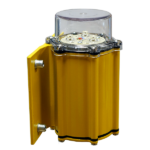
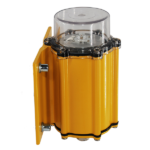
Pulsar Type A Double Obstruction Light Low Intensity
Request a quote Request a quote
🚚
DHL Express → UAE:
from ~259 AED
· delivery ~2-3 days (est. weight 1 kg)
Exact cost calculated at checkout based on your address · estimate
Description
Pulsar Type A Double Obstruction Light Low Intensity
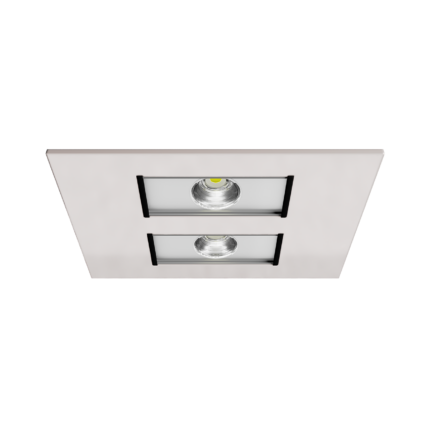
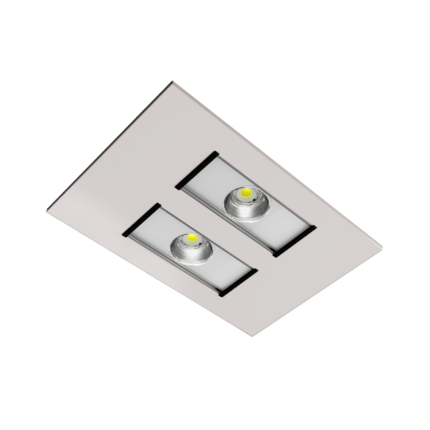
The Pulsar Type A Double obstruction light is the redundant version of the low intensity beacon. It is built for owners of masts, buildings and antennas who cannot accept an interruption in marking. Two red LEDs on separate circuits guarantee continuity: if the primary circuit fails, the secondary LED lights automatically.
Benefits
- Marking without a gap: the redundancy and alarm device performs the changeover between LEDs with no human intervention.
- Same photometry on backup: the light characteristics are preserved after the switch to the secondary LED.
- Above 10 cd: the output meets ICAO Annex 14, Volume I for Type A double beacons between 2 and 10 degrees.
- Only 1.5 W: running costs stay negligible and solar supply becomes practical on remote sites.
- Built for harsh exposure: IP66, IK10 and an electrostatically painted extruded aluminium body.
- Visible from any angle: the transparent polycarbonate optic distributes the light through 360 degrees.
Technical specifications
- Beacon type: low intensity, Type A Double
- Housing material: electrostatically painted extruded aluminium
- Housing colour: aviation yellow, RAL 1004 (standard)
- Diffuser: transparent polycarbonate
- Light source: 2 high-intensity OSRAM LEDs (primary and secondary)
- Independent circuits: 2
- Light colour: red
- Luminous intensity: above 10 cd
- Power supply: 110-230V AC, 50/60Hz or 12V, 24V, 48V DC
- Consumption: 1.5 W
- Electrical insulation class: I
- Ingress protection: IP66
- Impact protection: IK10
- Operating temperature: -20 to +40 degrees C
- Fixing: on a pole of 32-65 mm diameter
- Dimensions: 70 x 140 mm
- Weight: 0.9 kg
Applications and installation
Use the Pulsar Type A Double beacon to mark aviation obstacles: masts, buildings, antennas and industrial chimneys. Clamp it to a pole of 32 to 65 mm and connect it to the redundancy and alarm device, which drives the two circuits and forwards the fault signal. On sites with no grid, power it from the photovoltaic system at 12V or 24V DC. IP66 protection resists blown dust and heavy rain outdoors, while the rated ambient band of -20 to +40 degrees C should guide the mounting position.
Frequently asked questions
How do I know the primary LED has failed? The redundancy and alarm device lights the secondary LED and raises an alarm signal you can take into your monitoring system.
Does intensity change on the backup LED? No. The photometric characteristics stay the same, above 10 cd, whichever circuit is active.
Is the redundancy device mandatory? Automatic changeover between the two LEDs is performed by that device, so we recommend it in every Type A double installation.
Reviews (0)
Only logged in customers who have purchased this product may leave a review.
Shipping & Delivery
Datasheets
📄 Download technical datasheetPDF · Pulsar Type A Double Obstruction Light Low Intensity📖 LED Lighting cataloguePDF · full product brochure
Photometric files (IES / LDT) and installation drawings are available on request. Write to [email protected] or message us on WhatsApp.




Reviews
There are no reviews yet.