












Fire protection for solar PV systems and lithium batteries: a new range at EcoSolaris

Solar PV systems and lithium-ion batteries brought a type of fire into our homes and warehouses that the classic extinguisher on the wall does not solve. We now carry a complete fire protection range — 47 products — built exactly around these risks: arcing inside DC connectors and thermal runaway in lithium batteries.
Where PV fires actually start
A PV system has dozens or hundreds of DC connectors. Each one is a mechanical joint carrying 10-15 amps, year after year, through frost, heat and rain. Most incidents start from ordinary installation mistakes:
- Poor crimping — the contact does not press hard enough on the conductor, resistance rises and the joint heats up with every hour of sunshine.
- Connectors from different makers pushed together because “they fit”. The geometry differs by fractions of a millimetre and contact stays partial.
- Assembly in damp conditions, or an incomplete click that never engaged the lock.
That is where the arc appears, at thousands of degrees — far above the melting point of the copper and plastic in the connector. With bitumen membrane, OSB or timber under the array, a fire has everything it needs. And DC does not self-extinguish at zero crossing the way AC does: the arc sustains itself.
Why lithium-ion batteries need a different approach
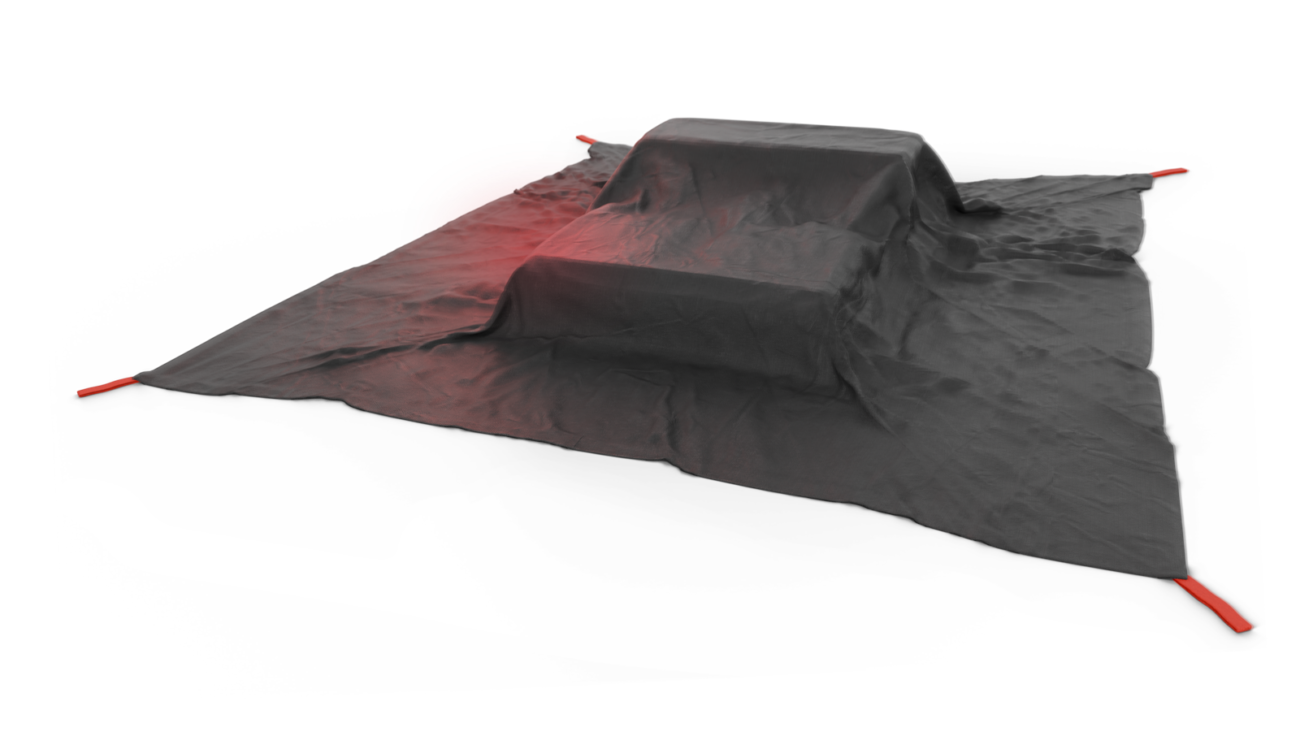
Once a lithium-ion cell enters thermal runaway, the reaction feeds itself from inside the cell. It does not need oxygen from the air, so smothering does not help. Powder knocks down the flame at the surface but never cools the core, and the battery re-ignites minutes or hours later. What works is massive cooling that breaks the chain reaction — what dedicated lithium agents do — or full containment with a technical blanket or a purpose-built box.
What we now carry
1. Protection at the connector itself
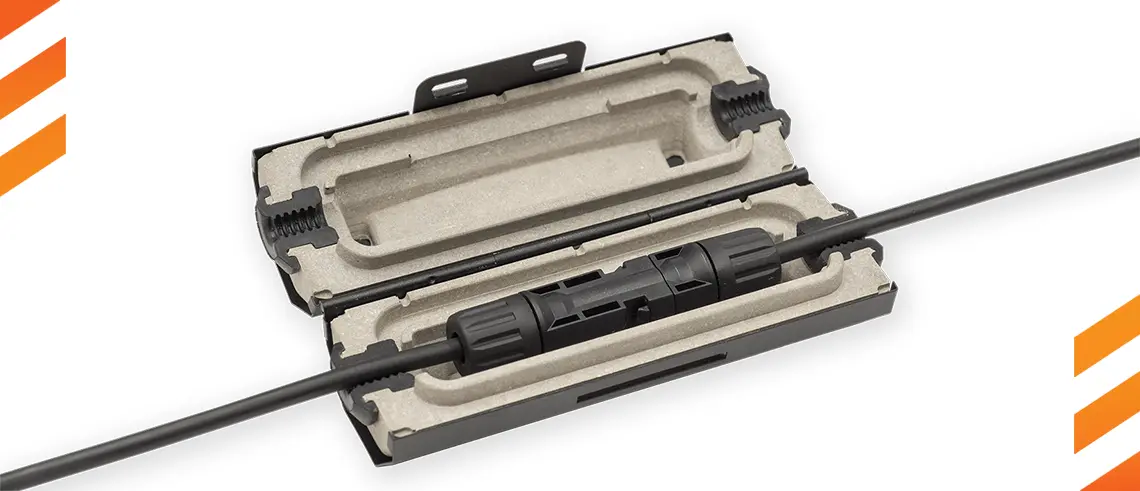
The DC connector enclosure snaps around the joint and, if an arc occurs, keeps it contained in a ceramic material that withstands extreme temperatures. Ventilation and drainage ports keep the connector at its normal working temperature and stop moisture building up. Installation takes seconds per connector, on new and existing systems.
Its effectiveness has been independently verified: the KIWA fire testing laboratory and the Slovenian National Building and Civil Engineering Institute (ZAG) ran arcing for more than five minutes without fire spreading to the roof materials — on flat roofs and on roof-integrated systems. Loughborough University separately confirmed that connector temperature stays within the manufacturer limits, so no current derating is needed.
2. Automatic suppression, no power and no people
Aerosol devices install inside a switchboard, an inverter or a battery box and trigger by themselves at the activation temperature, flooding the enclosure with particles that break the combustion reaction. No pressure, no power supply, no residue that would destroy the electronics. The heat-sensitive tube version does the same job differently: the tube bursts exactly at the hottest point and releases the agent straight onto the seat of the fire.
3. Battery response equipment
Extinguishers with dedicated lithium agents, fire blankets and storage boxes cover the response side: from a scooter battery to multi-kWh storage systems. Blankets also work on vehicles, forklifts and e-bikes, while the boxes contain the effects of a thermal runaway inside.
4. Passive protection
Intumescent and thermal insulating coatings delay ignition and flame spread — useful on timber structures, plaster and building elements near the installation.
Products from the new range
A few of the most requested, to give you an idea:
How to choose, in short
Rooftop PV at home? Start with the DC connector enclosures — they are inexpensive and cover exactly the point where most fires start. Add an aerosol device in the DC switchboard or next to the inverter.
Battery storage as well? Put an aerosol device inside the battery enclosure and keep a lithium-rated extinguisher within reach. If the battery sits in a garage or indoors, a technical blanket is worth having.
Warehouse, car park or fleet? Time is what counts: fire blankets for vehicles and forklifts, a wall cabinet next to the charging area and, where batteries are charged, a storage box.
On every product page
The manufacturer datasheet, specifications taken straight from the official documents and, where the manufacturer published one, the recorded fire test. All items are in stock.
See the full fire protection range →
Already have a system installed and not sure where to start? Write to us at [email protected] and we will look at your setup together.